

A backyard playset can help children develop physical, cognitive, social, and creative skills through active outdoor play. Climbing, swinging, sliding, balancing, and imaginative play give kids opportunities to build coordination, strength, confidence, problem-solving abilities, communication skills, and independence—all while having fun.
Quick Facts
Best for: Growing children from toddlerhood through elementary years
Skills developed: Physical, cognitive, social, emotional, and creative skills
Active play can encourage: Balance, coordination, strength, agility, and spatial awareness
Imaginative play can encourage: Creativity, communication, storytelling, and problem-solving
Biggest benefit: Children can practice important skills through play without feeling like they’re doing “work.”
Table of Contents
- What Skills Can Kids Learn on a Backyard Playset?
- 1. Balance and Coordination
- 2. Strength and Physical Fitness
- 3. Spatial Awareness
- 4. Problem-Solving
- 5. Confidence and Independence
- 6. Social Skills
- 7. Creativity and Imagination
- 8. Risk Assessment and Decision-Making
- 9. Persistence and Resilience
- 10. Communication Skills
- How Different Playset Features Encourage Different Skills
- More Than a Place to Play

What Skills Can Kids Learn on a Backyard Playset?
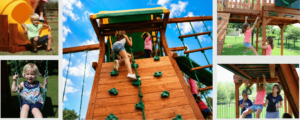
A backyard playset might look like a place for children to burn off some energy, but there is much more happening during play.
When children climb, swing, slide, balance, explore, pretend, and play together, they are constantly learning about their bodies, their surroundings, and the people around them.
And because they’re having fun, learning doesn’t feel like learning.
Here are some of the skills children can practice on a backyard playset.

1. Balance and Coordination
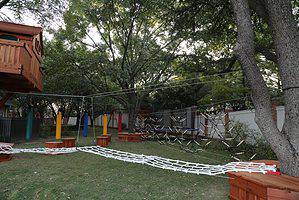
Climbing across a bridge, stepping onto a platform, navigating a climbing wall, or moving across different playset features requires children to coordinate their movements.
They are learning how to:
Move their hands and feet together
Maintain balance
Control their bodies
Adjust their movements
Navigate different surfaces
Every trip across a playset can become a little exercise in coordination.
________________________________________________________________________________________________________________________________________

2. Strength and Physical Fitness
Climbing, hanging, swinging, and moving around a playset require children to use their muscles.
They may use their:
Arms
Legs
Hands
Shoulders
Core muscles
Regular active play gives children opportunities to move their bodies in different ways instead of spending all their outdoor time sitting.
And let’s be honest—there’s something pretty satisfying about watching a child conquer a climbing feature they couldn’t quite manage a few months ago.
________________________________________________________________________________________________________________________________________

3. Spatial Awareness
Children are constantly learning where their bodies are in relation to the world around them.
A playset gives them opportunities to figure out questions like:
How high am I?
Where should I put my foot?
Can I reach that?
How far do I need to stretch?
Which way should I go?
This is part of developing spatial awareness, which helps children understand distance, position, movement, and the space around their bodies.
________________________________________________________________________________________________________________________________________
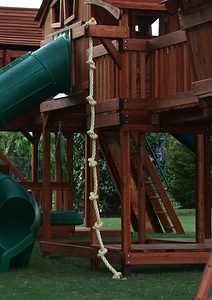
Big Knot Rope Climber
4. Problem-Solving
Not every challenge on a playset has an obvious answer.
A child might reach a climbing feature and think:
“How am I going to get up there?”
They may try one approach, discover it doesn’t work, and try something different.
That process gives children opportunities to practice planning, experimenting, adapting, and problem-solving.
And sometimes the best learning happens when adults don’t immediately jump in with the answer.
________________________________________________________________________________________________________________________________________
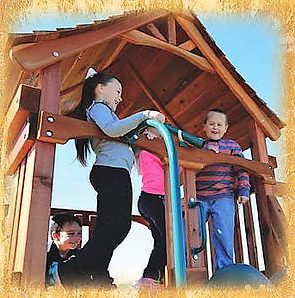
5. Confidence and Independence
Remember the first time your child climbed something they were nervous about?
That little moment of:
“I DID IT!”
is powerful.
As children become more comfortable navigating a playset, they can begin making their own decisions about what they want to try.
They learn:
“I can figure this out.”
That sense of accomplishment can help children develop confidence and independence.
Of course, children should always use play equipment appropriate for their age and abilities, with appropriate adult supervision.
________________________________________________________________________________________________________________________________________

6. Social Skills
A playset can also become a place where children learn how to play with other people.
When siblings and friends play together, they may need to:
Take turns
Share equipment
Communicate
Cooperate
Make up games
Solve disagreements
Follow rules they create together
Sometimes the most important lesson isn’t who gets to go down the slide first.
It’s learning how to work it out when everyone wants to go first.
________________________________________________________________________________________________________________________________________

7. Creativity and Imagination
This is where a playset can become something completely different.
A fort can become a castle.
A deck can become a restaurant.
A climbing wall can become a mountain.
A slide can become the escape route from a pirate ship.
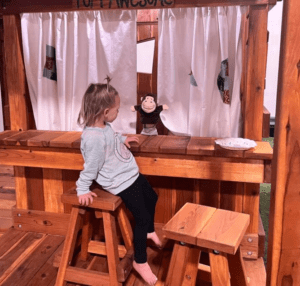
A Lemonade Stand becomes a Puppet Show
Children don’t necessarily see a playset the way adults do.
We see wood, swings, slides, and climbing features.
They may see an entire world.
That’s why features such as Lemonade Stands, Farmer’s Markets, Mud Pie Kitchens, Steering Wheels, and other imaginative-play accessories can add another dimension to outdoor play.
________________________________________________________________________________________________________________________________________

8. Risk Assessment and Decision-Making
Children naturally encounter challenges during active play.
They may decide:
“I’m ready to try this.”
Or:
“I’m not ready yet.”
Learning to recognize their own abilities and make appropriate choices is an important part of growing independence.
A backyard playset can provide opportunities for children to practice making decisions within an environment designed for play, while adults provide appropriate supervision and guidance.
________________________________________________________________________________________________________________________________________

9. Persistence and Resilience
Sometimes children don’t get something right the first time.
Maybe they can’t make it across a climbing feature.
Maybe they lose their balance.
Maybe their pretend game doesn’t work the way they imagined.
They try again.
And sometimes they try again and again.
That persistence is valuable.
Children learn that not getting something right immediately doesn’t necessarily mean they can’t do it.
________________________________________________________________________________________________________________________________________
10. Communication Skills
Play naturally creates reasons to talk.
Children explain their ideas.
They give instructions.
They make up stories.
They negotiate roles.
They ask questions.
They tell their friends what happens next.
A backyard playset can become a setting where children practice speaking, listening, storytelling, and expressing their ideas.
Click here to check out our Accessories page!………Click here to check out our Additions page!
How Different Playset Features Encourage Different Skills
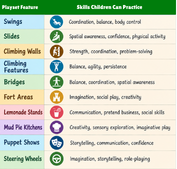
One of the things I love about a well-designed playset is that different features can encourage different types of play.
The more opportunities children have to move, explore, imagine, and interact, the more ways they have to learn through play.
The Wonderful Thing About Outdoor Learning
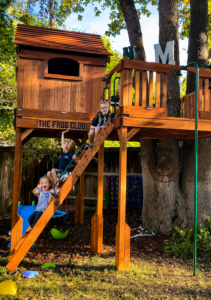
Children don’t need a worksheet to practice problem-solving.
They don’t need a classroom to practice communication.
And they don’t need a structured lesson to practice balance and coordination.
Sometimes they just need a place to play.
A backyard playset gives children opportunities to move their bodies, challenge themselves, interact with others, and create their own adventures.
And those opportunities can change as children grow.
The climbing feature that seemed impossible at first may eventually become easy.
The fort that was once a castle might become a secret clubhouse.
The swing that once required help may eventually be something they can use independently.
The play changes because the child changes.
More Than a Place to Play
Because when children are outside playing, they’re doing much more than simply passing the time.
They’re practicing skills they’ll carry with them long after playtime is over.
At Backyard Fun Factory, we believe that anything worth doing is worth doing right.
That’s why we build every playset with quality materials, thoughtful design, and lasting family fun in mind.
Because your family deserves our best.

FUN Is Our Middle Name!
Wooden Swing Sets, Redwood Playsets
Backyard Fun Factory Locations:
Fort Worth/White Settlement Showroom
7600 White Settlement Road
Hours: Tues-Sat – 9:00-4:00
Phone – 940-479-2439
Frisco Showroom
301 King Rd. Suite 1
Hours: Tues-Sat – 9:00-4:00
Phone – 940-479-2439



Helpful Resources
· What Are The Benefits of Outdoor Play?
· Growing Strong Minds One Swing At A Time
· After-School Adventures Start in the Backyard
· How Climbing on a Backyard Playset Builds Confidence in Kids
Related Posts
Naeyc:: 10 Things Every Parent Should Know About Play
National Institute For Play: Types of Play



You must be logged in to post a comment.